We picked the very last of the tomatoes before the first freeze a week and a half ago. With a bowl of cherry tomatoes sitting on the counter, it was time to put them to use. These are great with pasta or on pizza.
Cherry tomatoes
Olive oil
Salt and pepper
Dried basil
Preheat the oven to 375 degrees.
Spread the cherry tomatoes in a single layer in a baking pan. Drizzle with olive oil and sprinkle with salt, pepper, and a bit of dried basil. Toss to coat the tomatoes all over, then return them to their single layer.
Roast for 25-35 minutes, until the tomatoes have split open and turned appealingly wrinkled and excess liquid has evaporated - but not to the point where they become glued to the pan.
Sunday, November 3, 2013
Cream-Braised Brussels Sprouts and White Beans
If you are a Brussels sprouts skeptic, or there's one in your family, this is a good point of entry (I speak from experience, both my own and that of my six-year-old who came back for thirds), especially now that we've had a few good frosts and the sprouts are at their best. This is an adaptation from Julia Child in Mastering the Art of French Cooking. The good health points from the sprouts may well be totally counter-weighted by the cream, but it sure is delicious.
1 quart Brussels sprouts, trimmed
1 Tbsp butter
1 1/2 cups cooked white beans
1/2 cup heavy cream
Salt and pepper to taste
If your sprouts are large, cut them in half. Otherwise, use them whole.
Bring a medium saucepan of water to a boil. Salt generously, then cook the Brussels sprouts at a vigorous simmer for about 8 minutes, until tender when pierced with a fork. Drain the sprouts.
In a small skillet or medium saucepan, melt the butter then add the sprouts. Saute for 1-2 minutes, then add the beans and the cream. Simmer until the cream thickens somewhat and the beans and sprouts are nicely permeated with it. Remove from heat. Add salt and pepper to taste.
Serve hot.
Serves about 4.
Friday, October 25, 2013
Pureed Lentil Soup with Roasted Red Peppers and Fennel
This is a warming, hearty soup, and the flavor of the roasted red peppers really comes through in every bite. If you want a version that's less brown, try red lentils (they also cook faster, but don't have quite the same comforting heartiness of their brown cousins).
2 cups brown lentils
7-8 cups beef stock and/or water
Olive oil
4-6 cloves garlic, minced
1 medium onion, chopped
1 medium fennel bulb, cored and chopped
5-6 ounces roasted red peppers, chopped (~3 medium peppers)
2 Tbsp red wine vinegar
Salt and pepper
Place the lentils in a soup pot with 6 cups of water. Bring to a boil, then simmer until tender, about 30 minutes.
While the lentils cook, heat a little olive oil in a large skillet. Add the garlic, onion, and fennel, and saute over medium heat, stirring frequently, until soft, about 10 minutes. Add the roasted roasted red pepper and set aside.
When the lentils are tender, stir in the vegetable mixture and the red wine vinegar. Puree using an immersion blender or carefully do it in batches in a regular blender. Add salt and pepper to taste.
Serves 4-6.
Variation: Substitute red lentils, chicken or vegetable stock, and white wine vinegar or sherry vinegar for a lighter texture and flavor.
Sunday, October 20, 2013
Drying Apples and Asian Pears
I love drying fruit at home - it's easy, and the flavor is like nothing you've ever tasted in dried fruit from the store.
Our little Asian pear tree, planted a few years ago, produced its first harvest of any size this year. The pears are delicious fresh, but we had a few more than we could eat before they would start to get soft and lose their flavor, so I wanted to try drying them. To get a full dehydrator load, I added some apples - they can be prepared the same way and take roughly the same amount of drying time (the apples dried slightly faster than the pears).
If you've never had an Asian pear, they look a bit like apples - rounder than the classic European pear we mostly see around here - and they are crisp rather than soft. The skin is edible but usually a bit tough, so it's best to peel them for eating.
For both apples and Asian pears, the way to prepare them for drying is to peel, core and slice to about 1/4-inch thick. The easiest way I have found to do this is using an apple machine - you can find these at many stores with kitchen supplies (around here, Wilson's and also the Farmers Coop, among others) - that peels, slices, and cores all at once.
Spread the fruit out in a single layer on the dryer trays and dry for 6-8 hours (maybe slightly longer for the pears), until the fruit is completely dry but still pliable.
Orzo with Leeks
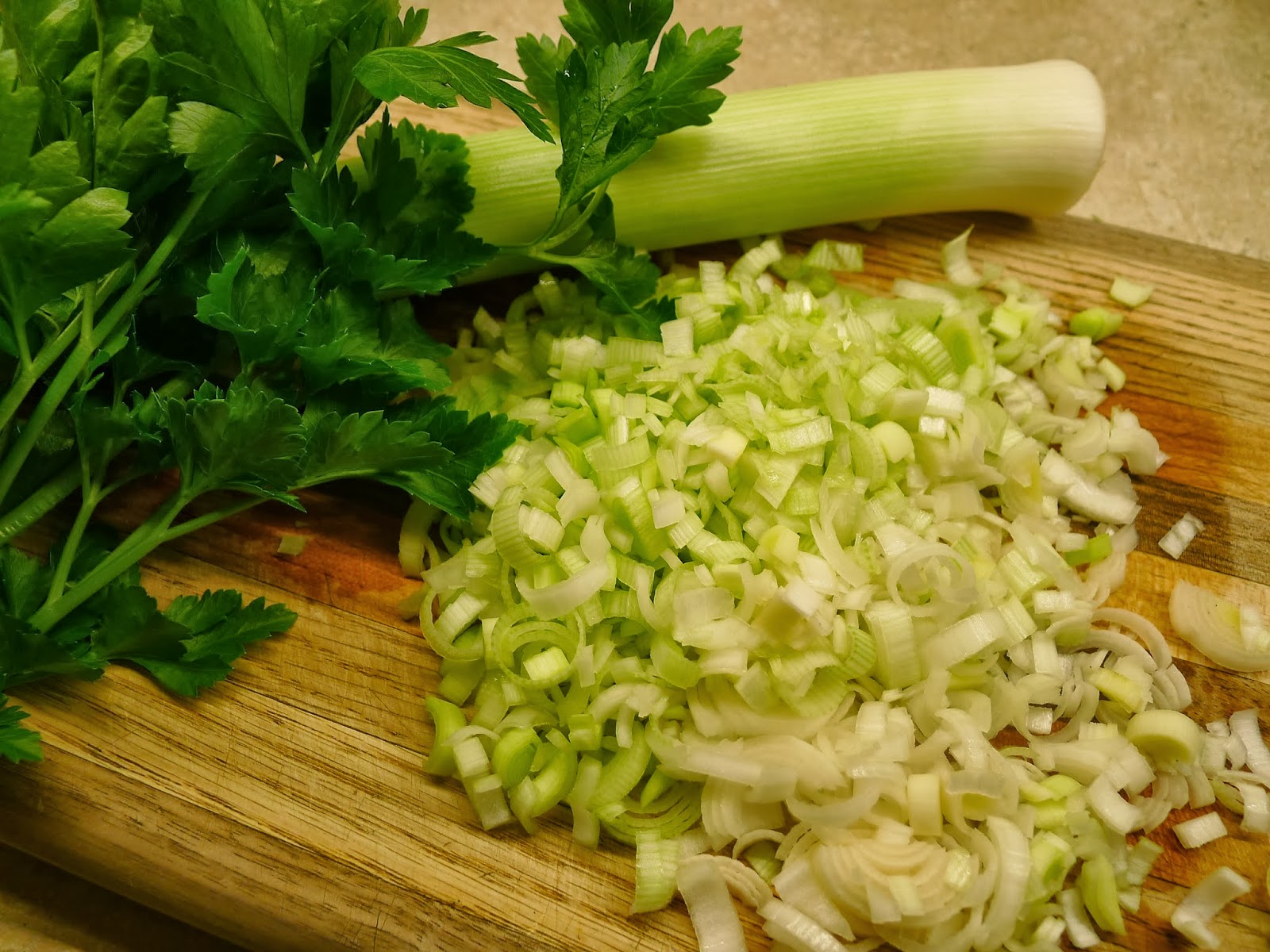
Many types of leeks are quite cold hardy, and they linger happily in the garden after many other things are done. Mine have fattened up nicely, begging to have their delectable flavor added to all sorts of all dishes. This one is a simple side that showcases the flavor of the leeks. The parsley and lemon juice are a nice addition but this is quite excellent with just the leeks and orzo.
8 oz dry orzo
Olive oil
2 fat leeks, well chopped
Salt and pepper
1/2 cup chopped fresh parsley (optional)
1/2 - 1 tsp lemon juice (optional)
Cook the orzo in a pot of salted boiling water until al dente, then drain and toss with a little olive oil to keep it from sticking.
While the orzo cooks, heat a little olive oil in a skillet and saute the leeks over medium high heat until tender, about 5 minutes. Stir the leeks into the orzo, then add salt and pepper to taste along with the parsley and lemon juice if using. Serve warm.
Serves 4-6 as a side dish.
Maple Baked Squash Halves
This is a classic New England preparation of winter squash. Everyone gets to scoop squash flesh out of their own half, which makes for an attractive presentation as well as fun for kids.
2 or more 'personal sized' winter squashes - delicata, acorn, buttercup, etc
Canola oil
1/2 tsp maple syrup per squash half (the darker grade the better)
Salt
Preheat the oven to 400 degrees.
Cut the squashes in half vertically and scoop out the seeds. Place the halves in a baking pan, cut side up. Drizzle each one with 1/2 tsp maple syrup, then spray or brush lightly with a little canola oil. Sprinkle with a pinch of salt.
Bake the squash for 40-50 minutes, until the flesh is tender when pierced with a fork. Serve hot, giving eat diner 1-2 halves.
2 or more 'personal sized' winter squashes - delicata, acorn, buttercup, etc
Canola oil
1/2 tsp maple syrup per squash half (the darker grade the better)
Salt
Preheat the oven to 400 degrees.
Cut the squashes in half vertically and scoop out the seeds. Place the halves in a baking pan, cut side up. Drizzle each one with 1/2 tsp maple syrup, then spray or brush lightly with a little canola oil. Sprinkle with a pinch of salt.
| Ready to bake |
Monday, October 14, 2013
Pizza with Roasted Red Peppers, Goat Cheese, and Fresh Arugula
I borrowed a trick learned from the chefs at Mag Pie and tossed fresh arugula on here after baking - delicious, and a perfect contrast to the roasted peppers and goat cheese.
1 14-inch pizza crust
Olive oil
3-4 ounces shredded mozzarella
2 ounces roasted red peppers, sliced
1 medium shallot, finely chopped
2 ounces goat cheese
1 1/2 cups chopped fresh arugula (raw)
Preheat the oven to 450 degrees. Lightly paint the pizza crust with olive oil.
Sprinkle the mozzarella over the pizza crust, then add the sliced roasted red peppers. Sprinkle with shallots, then dot with goat cheese. Bake for 15-18 minutes, until the crust is done and cheese begins to brown. Upon removing from the oven, sprinkle the arugula over the top of the pizza. Serve immediately.
Serves 3-4.
Subscribe to:
Posts (Atom)